
We're facing more choices than ever in history... yet most of us can't make decisions

Remember The
Sunscreen Song, which came out with the Romeo and Juliet movie
in the late 1990s? When it comes to snappy truth bombs, this song is an
absolute goldmine (it’s basically Pinterest in music). These lines are among
the most memorable, for me: “Whatever you do, don’t congratulate yourself too much, or berate
yourself either. Your choices are half chance – so are everybody else’s.”
Personally, I don’t believe in ‘chance’. But I love
this lyric because it reminds me not to put too much pressure on myself when it
comes to making choices – because I don’t have absolute power to determine the
outcome. Since that song came out and I’ve gained a greater understanding that
anything I create in my life is a partnership between myself and the Universe,
I now realise that I can’t possibly make a bad choice. #relief
One of the main factors that drives people to book
an angel card reading with me is they’re facing a tough decision. Their
circumstances can be vastly different – a job opportunity that requires them to
move cities, a relationship that is no longer satisfying, perhaps – but the
common thread is fear of failure. They know deep down what is right for them,
but they’re scared to commit to that course of action in case they’re ‘wrong’.
I read a UK magazine article recently which
suggested that people in the west are facing more decisions
than ever before in history, and as a result, our anxiety over
making any selection has increased. Previous generations – particularly women –
did not have as many options available to them as far as jobs, relationships
and lifestyle. We can now have anything and do anything we want – yay! That’s
undoubtedly a good thing, and I’m not for a minute advocating our choices
should be curbed, but if you’ve ever found yourself stressed out over a
four-page pizza menu, unable to make a selection, you’ll know that too many
choices can be overwhelming.
“From research we know that people with no choice
are significantly more resilient because they can blame life or other people
when they make a wrong decision,” psychologist Pieter Kruger says in the
article. “But if you make a wrong decision having had a range of choice, you
have no one to blame but yourself. We become much more obsessive because we
want to make the right decision every time.”
US psychologist Barry Schwarz, author of The
Paradox Of Choice, agrees. In an article with The Guardian he
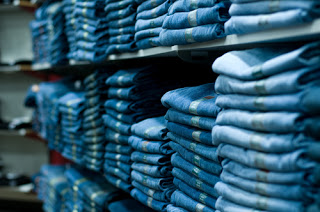
described how there are so many varieties of jeans available now – stone-washed,
straight-leg, boot-fit, distressed, zip fly, button fly, slightly distressed,
very distressed, knee-holed, thigh-holed, knee and thigh-holed – that his
expectations of finding the perfect pair for him are high… and inevitably, he
winds up disappointed.
Adding to our decision-making anxiety is social
media, which has somehow become our yardstick of success. We’re being
constantly slammed with pictures of people appearing to nail their life choices
– cosy relationships, chic wardrobe picks, glamorous travel itineraries and
high-achieving kids. Even though we may be vaguely aware that what we’re
looking at is contrived and edited, rather than an accurate summary of other
people’s lives, we can still wind up feeling like everyone else is doing life
*right*. The allure of achieving something equally fabulous can be strong.
If you feel crippled by decision making, it might
be worth asking yourself if you’re putting too much pressure on yourself to
achieve a dream result. The resulting state of stress means you’ll struggle to
hear guidance from your intuition (which is your best asset when it comes to
making decisions).
From a spiritual perspective, it is not possible to
make a bad decision, because every course of action you
take will teach you something valuable you need to know for your soul’s
journey. Even if the situation doesn’t work out the way you’d hoped, you will
always be better for it. Plus, the Universe has a way of course-correcting you
if you go way off track.
When I finished my journalism degree, I struggled
to find employment. After three months I applied for, and got, a role on a
business newspaper – which, for someone with zero interest in financial
journalism, was not an appealing option. A year later, that publishing company
went into receivership, owing me more than $2200 in unpaid wages and holiday
pay*. This was not, obviously, an optimum result for me. But that does not mean
it was a bad decision. I got the valuable experience I needed, which, as a new
graduate in a flooded job-seeker market, I was struggling to get. I learned
professional skills that set me up for my career path. Plus, I made a friend I
instantly bonded with – and 15 years later, we remain close. I lost money, and
I ended up unemployed again for several months… but if given the chance to go
back, I would make the same decision again.
The truth is, the Universe will always make
sure you end up in the right place, and among the right people, for your
highest good. You may not have Oprah Winfrey’s wealth, Lena Dunham’s body
of work or Salma Hayek’s boobs, and probably you never will, but you do have a
pure heart, a resilient spirit, treasured memories, wonderful people in your
life and the knowledge that the best is yet to come.

This I know to be true: you are exactly
where you are supposed to be. I imagine that some people will find that
depressing – probably because they believe that they have total control over
their lives, or they had expectations of something more glamorous – but I
personally find it enormously comforting. It means I’m being looked after by
the Universe, and it also means that while I have the power to create anything
I want, my choices won’t have the monumentally dire consequences I might have
imagined.
The only bad decision we can possibly make is to let
fear paralyse us to the extent that we make no decision at all.
Instead of procrastination, let’s choose courage
and action.
*I got back about $345 of this around a year later, after
the liquidators had settled the company’s affairs. Sad face.
The great pretender: imposter syndrome, and the fear of being found out

I used to have a friend who held a prestigious, high-powered
job in magazines. She was great at it, too – but she didn’t think so. She once
confided to me that she lived in terror that someday someone would tap her on
the shoulder and ask her to leave, telling her they’d figured out she wasn’t up
to the job after all.
This is what imposter syndrome looks like. At heart,
it’s the belief that you’re not good enough, and it typically involves a deep fear
that your inadequacy will be uncovered, probably in dramatic fashion. It’s
typically experienced by more women than men, because we are, according to
experts, more likely to recognise our faults (I’ll just park that statement
without further comment).
Imposter syndrome has got naught to do with your actual
performance or skills, it’s solely about an internal conflict, a deep suspicion
that you’ve somehow hoodwinked everyone into letting you have this job or
partnership, and they’re going to find out the truth about you very soon and
your entire life will implode.
Whenever we’re dealing with a fear – particularly one like
this, which has no logical foundation – the first most helpful thing we can do
is remind ourselves we’re not alone. Fear is a projection of the ego, not the
soul, and the ego is all about separating us from others. And you’re not alone,
truly. More than 70 per cent of people have experienced feelings of
fraudulence. That’s *feelings* of fraudulence, not actual fraudulence.
 Imposter syndrome thrives on blissful ignorance of the
facts. It ignores that your employer put you in this position because they
think you’re good enough. It ignores that you’ve already turned in work of a
high, or at least passable, standard. Reality check: even if you don’t feel
like you know what you’re doing (which is probably not true), you know enough
to be in the position you’re in, and there’s no reason you can’t learn more
from that platform. You are already good, but it’s your willingness to keep
going in the face of fear and all its stupid stories that makes you great.
The truth is, no one knows what the hell they’re
doing, most of the time. Fake it ‘till you make it is an entirely reasonable
work philosophy. In this life, we’re all making it up as we go along – anyone
who is a parent can vouch for this. Expecting ourselves to be ace at everything
is just another way we covertly bully ourselves. So, so unhelpful.
If a fear that your staff don’t rate you as a manager
is a source of anxiety for you, try to remember that what other people think of
you is none of your business. I know, I know… you *want* them to feel confident
in your abilities so they do their best work, but ultimately that’s up to them,
not you. The only thing within your control is, not the way others feel about
you, but the way you feel about yourself. And if imposter syndrome is an issue for
you, perhaps you need to do some work on bolstering that (don’t we all!).
Although I haven’t experienced imposter syndrome
myself, I’m very familiar with the feeling of inadequacy. My feelings of
unworthiness in any given situation generally stem from my tendency to compare
myself to others, and as a result, finding myself lacking. Like this: ‘She’s so
outgoing and funny and popular, and I’m so dull and awkward.’ In all honesty I
don’t know whether there will ever be a point at which I will ever totally
recognise my own worth – I doubt we as humans can ever fully understand our own
power in this lifetime – so instead of focusing on what it is I perceive that
I’m lacking, I try to look at what I do have. Not in a ‘well she may be pretty
but I’m this and that…’ type of way, more just a general counting of my
blessings without using anyone else as a reference point. This strategy has been working really well for me. In spiritual truth, none of
us really lacks anything – we are all complete. Different, but wholly
everything that we need to be.

What I’ve found helpful when it comes to getting on
top of my comparison tendency has been turning it on its head by comparing
myself with… myself. Looking back at the person I was six months, a year or two
years ago, and taking a moment to appreciate how my emotional responses and
behaviours have changed and matured gives me a sense of value. I don’t need to
be the best, I just need to be better than I was. And I am, every day. And I
know that you are too. (Better than yourself, I mean. Not better than me, obvs.
Although you could be. Hey, let’s not compete, OK?)
I used to hate birthdays. Now everything is different
 I celebrated my
birthday this week. I mean that literally – I really celebrated it. This is
significant for me because in past years I’ve greeted my birthday like a
smelly, irritating relative that comes to stay every year, whose presence I
endure with practised stoicism. The only celebration would happen the day
after, when I’d wake up awash with relief that it was all over for another
year.
My reasons for resenting
my birthday were partly due to the fact that it drew attention to me – and
as an introvert, this is excruciating. Seriously, I will vote for the next
politician who promises to ban the singing of Happy Birthday in workplaces. *shudder*
But at the heart of
my day-of-birth anxiety was the fact that they were a reminder that
another year had passed and I was not living the life I wanted to live.
There
was a sense that I was running out of time to be happy, or to achieve a life
that looked anywhere near as glossy as those of my peers. Every year my misery increased exponentially
as I was faced with the realisation that my life had not changed significantly
from how it looked at the last birthday.
This year, however,
felt different.
I’ve made some major internal changes during the year that have affected the way I see myself and my future.
I have a clearer sense of my life purpose and, most significantly, the value that I hold. I
can look back on my regrets without feeling burdened by them. Right now I’m in
the process of changing careers, so I don’t feel stuck or inadequate professionally any more.
I no longer fret about being single, nor interpret this as evidence that I am
flawed. It feels like I have enough time, and enough support from the Universe,
to grow to a point that I can emotionally handle, and flourish in, a relationship.

I have wonderful
friendships in which I have a sense of belonging and feel valued. Actually,
this is probably the most significant change of all when it comes to birthdays.
I can still remember the despair and humiliation of my 32nd birthday when only
two people showed up for drinks. As I write this post, I’m preparing to meet 18
friends for my birthday celebrations. This blows my mind – 18 people like me
enough to come and celebrate with me!
What all this amounts to is me having dropped my ideas of how my life should look – which is what was
causing my birthday angst in the past. Instead I’ve arrived at something very close
to acceptance of what is. I can recognise and celebrate the many blessings in my life and I don’t feel myself disappearing into the blistering chasm between the hand I imagined I would play, and
the hand I’ve been dealt. In addition, I know how much power I have to bring about change, so I’ve dropped my self-pity I used to hold.
Most crucially, I’ve
stopped comparing myself to other people on the regular. On this point my resolve gets
tested often (particularly on social media) but I’m better able to detach from comparisons, and jealousy. This
is not easy when you’ve grown up in New Zealand, a country where your
relationship status is prized above any personal attributes or achievements. But
it’s in my choices, not my circumstances, that I measure my worth now.
This is the first year
that I truly understand exactly how much I have to celebrate, and I have good reason
to believe that will expand and deepen as I age. In a culture
obsessed with time and deadlines, my anchoring principles are these: I am exactly where I am
supposed to be, and the best is yet to come.
I still hate that
fucking office birthday singalong though.
I had a dream. This is what it taught me

Recently I had a dream so potent that it has stayed with me for more
than a week.
I was walking with some people I used to know, who are very
sophisticated and elegant. We were heading towards one person’s
home, then they fell into a conversation I didn’t understand, and started to
gain pace. Suddenly it was like my legs had a rubber band around them, just
above the knees. My legs would only take small steps forward, and I couldn’t
separate them enough to lengthen my stride and catch up with the others. I was
shouting at them to wait for me but they were too engrossed in their
conversation to notice me.
Soon they progressed so far ahead I lost sight of them,
and I didn’t know where I was going. I became hopelessly lost, and got
stuck, briefly, trying to climb over a seawall. Eventually they
realised that I didn’t know where I was going and came looking for me. I
was quite distressed abut the fact that my legs had failed me and that I hadn’t
been able to stay with them. “I just couldn’t keep up with you,” I
said to them sadly.
I just couldn’t keep up with you.
This is the line that has been bouncing around my head ever since that
dream. I wrote it down in my dream diary when I woke up, but I didn’t really
need to – the meaning is so obvious. When I tried to follow other people’s
path, I lost my way.
Wanting to keep up with other people – specifically, people I perceive
to be cooler, hotter, more successful – is an old pattern of mine. It’s that
whole ‘fitting in’ strategy we adopt in our teenage years and often results in
us overspending on material goods in adulthood (keeping up with the Joneses, in
other words). It can also result in us painting the picture of a perfect life
on social media – and Brisbane model Essena O’Neill, 18, certainly did a brave
thing this week by admitting her Instagram shots were faked in order to cast
herself as someone to envy and admire.
 For me, the urge to keep up with other people is problematic for several
reasons. The first is that it’s based on comparisons. It involves me
assessing other people, concluding that they are superior to me for whatever
reason, and putting them on a pedestal. This is unwise, given I have no idea
what is actually going on in people’s lives beyond the surface. Are they good
people? Who knows! Are they happy? They probably have the same problems as
everyone else. Are they better than me? Well, no, actually – since life is not,
whatever Nike would like us to believe, a competition. I love this line in the
90s hit Sunscreen Song: "The race is long, and in the end, it’s
only with yourself."
There’s another problem here. Worrying about what other people have,
look like and appear to be doing takes my focus away from where it needs
to be: on my own growth and development.
This dream has been a wake-up call (literally!) that I need to
address the way I compare myself to others, and also the way that I measure my
own value. This is not a new lesson; I’ve referenced my struggles with
comparison and self-worth in many previous posts. But just like those
angel cards that keep recurring in the daily readings I do for you guys, these
messages will keep coming up until I can truly take them on board and move on.
The Universe will not stop throwing these messages at me until I learn the
lesson.
I can’t keep up with other people, and I don’t need to. I am
enough.
How do you get back up when life kicks you down? Start with your words
 It’s hard to pick just one standout quote from Paulo Coelho’s The Alchemist,
an exquisite book I have come back to again and again throughout my adult life, but this one would certainly be among my favourites: “The secret to life
is to fall down seven times and get up eight times.”
In less poetic terms: “I get
knocked down, but I get up again.” (Thanks for that, Chumbawamba.*)
Picking yourself up again after
failure, humiliation and heartbreak is achingly difficult, but very necessary if you want to move forward in your life. What Paulo Coelho is describing so lyrically is resilience.
So that’s the ‘why’; this is the
‘how’. The words you use are extremely powerful when it comes to getting back up when
you are down. I know this because science.
There’s a well-known study in which Japanese researcher Dr Masaru Emoto took two identical jars of cooked rice and wrote
“thank you” on one, and on the other “you fool”. He had school children say the
labels out loud to the jars every day as they walked past. After 30 days the
jar that had received positive affirmation was healthy while the one that was
abused had become mouldy and rotten. The conclusion: words have the power to affect
us on a cellular level, so it’s important to choose positive ones. In the interests of balance, I should probably point out here that the scientific community have been fairly critical of Dr Emoto’s research techniques. Still, the finding is an intriguing one.
Improving my self-esteem has been
a real focus for me this year, but what I’m realising lately is that it’s actually
self-compassion which is more beneficial to my confidence levels and life successes
than self-esteem. And just like Dr Emoto I’m fascinated by the power of words – specifically, how the language
I use in speaking to myself (both internally and externally) could play a key role in making
me a better me.
The difference between
self-esteem and self-compassion, explains respected US self-compassion researcher Dr
Kristin Neff, is that the former often involves us comparing ourselves to other people. Which no one does, obviously… except me and, you know, every woman
ever. (And potentially a lot of men too.)

Comparison might briefly boost your
self-esteem if you conclude that you’re better than other people in some way... but when you feel like everyone else is doing life better than you, your
self-esteem is going to suffer – badly. (Guilty as charged.) Self-compassion,
on the other hand, doesn’t hinge on you feeling special or different – all it depends on is you
treating yourself like a human being who deserves love and care.
Here’s
what happens: when you criticise yourself, cortisol (the stress hormone) is
released in your body. The resulting stress lowers your mood and motivation. So basically, criticism is being absorbed by your cells**. Yikes! But if, instead of criticising yourself, you can pick yourself up
in times of darkness and reassure yourself that the failure you’ve suffered doesn’t diminish your
value as a human being, you’ll be better able to get back up and try again,
says Dr Neff.
In other (my own), words, kicking your own arse only works if you do it with kindness.
In other (my own), words, kicking your own arse only works if you do it with kindness.
Perhaps
this could go some way to explaining why so many women struggle to lose weight
in the long term. If you slip up with your exercise and diet plan, then start beating
yourself up and call yourself fat, you’re unlikely to get back on track
with your weight-loss journey the next day.
I
don’t know what you guys take from these findings, but for me, it’s
made being nice to myself a far greater priority. It’s looking very much to me
like being my own best friend is the secret to getting back up again when life kicks me down. This is a friendship worth making time for.
*Here’s a
Chumbawamba throwback, because I know you want it. (Let’s just overlook the fact that the song’s about drinking, ’kay?)
**Did you know we
have more than 50 billion cells in our body? Whoa! I learned this at a recent seminar
by wellness guru Dr Libby Weaver.