
In praise of writing, and an insight into adrenal fatigue
 Hello, my name is Trudie. You might remember me from such places as... this very blog, which I
have somewhat abandoned of late. Please read on as I attempt to redeem myself with this shiny new blog post.
When I started www.onegroundedangel.com three years ago, I made a commitment to post three times a week. I was at war with myself, struggling with my sense of self and feeling isolated by what I perceived as the oppressive blanket of being an outsider (I was just starting to wake up to my spiritual calling). The angels advised me to ‘write my way out of it’.
And it helped. As the words flowed before me on the screen, a sort of alchemy occurred: I began to make sense of my emotions and could see the path ahead with a smidgen more clarity. My black spots diminished. Suddenly I had a sense of purpose; my life had meaning. Responses from others who 'got it' buoyed me; I began to feel less alone - still freakish (well, the best people are!), but more accepting of that.
Then, without my intending it, my blog morphed into a business site as my angel card business started to gain traction. With the demands of social media and a YouTube channel, launched one year ago, my commitment to the blog waned.

So on that note, here’s an update on what’s been going on in my world of late.
 This year I’ve been really struggling with low energy. Not just the ‘wow it’s been a big week’ sort of fatigue, but the ‘urge to sleep all weekend but still wouldn’t feel refreshed’ type. It’s not like any sort of fatigue I have ever known – and that’s coming from someone who has had insomnia much of her adult life. I did not notice that what I was enveloped in was not a normal sort of exhaustion. After a mild cold cleared quickly but left me feeling even more flat, I decided enough was enough and I sought out a naturopath.
What came up in tests was not low immunity, as I’d suspected, but abnormally low levels of the stress-hormone cortisol. The result: adrenal fatigue. Which was laughable since in my work as a health writer I’ve covered that very topic more than once in the past, interviewing the likes of holistic nutritionist Dr Libby Weaver, but failed to notice the symptoms in myself.
Adrenal fatigue is what happens when you operate at breakneck speed for too long. Essentially,

As well as dosing me up on myriad herbs and potions, my naturopath has instructed me to make some much-needed lifestyle changes. I’m banned from looking at my phone or tablet after 9pm (the blue light from these screens raises cortisol output). I must wake up between 6am and 7pm (sleeping in is a bad idea), and must be in bed by 9.30pm. I can only exercise in the mornings, at low or moderate intensity. I must reduce my sugar intake (something I have been using as a crutch to get me through the afternoons, as I don’t drink caffeine). When I’m working from home, I’m encouraged to take a short afternoon nap.

It’s been a few weeks since I started implementing these changes – some days I do better than others – and I’m already starting to feel better. It’s a long road ahead to fully heal my energy – there is no quick fix for adrenal fatigue – and I need to be patient with the process. However if I don’t spend the time now restoring my health, I’ll crash again in the future, and then I can’t do what my soul came here to do. My body is, after all, a home for my soul. I’ll keep you posted on my progress.
The message my body has been sending me (that I've been ignoring)
 I'm not very good at being sick (who is?). I rail at
the unfairness of not being able to follow through with my plans, trying desperately to convince my body it's fine,
silently seething at the sick people who probably infected me (damn you,
coughing man on the bus!). Since I'm self-employed I lose money for every day I
don't work, so I can't help but panic about the hit to my income... which only magnifies the
unrest within my body instead of promoting rest (so helpful). It's a shitty
situation, and yet, a very necessary one.
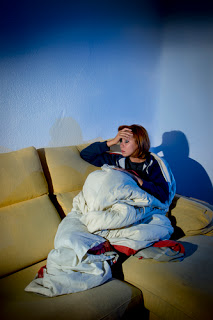
Recently I was struck down by a sinus infection that
morphed into a chest infection. I was confined to bed for almost three days,
too weak and feverish to move. And I was miserable.
When situations like this happen - which is very rare for me as my
immune system is really robust - it's difficult to remind myself that being
sick is NORMAL. There is nothing wrong with me. My body has not shut down
because it's broken, it has shut down because it wants to be stronger... and for
that to happen, it needs to rest and rejuvenate. That quote 'almost everything
works best if you turn it off and turn it on again' is pretty on point when it
comes to colds and flus.
But because we live in a 'go go go' culture, resting
is frowned upon. We try to 'soldier on' instead of giving our bodies what they
actually need - rest, and acceptance of our present circumstances. Our to-do list seems so much more
important than our health (even though, without our health, we can't do
anything). Then we wonder why we feel wiped out and then get sick again later.
Why is it so hard for us to listen to our bodies?
We also have a tendency to talk ourselves into being
sick... not ideal. If I had a dollar for every time I heard someone in the office declare: 'I think I'm
getting sick' or 'there's something going around - everyone's getting sick' I'd
be a very rich woman. When we talk or think about illness as an inevitability -
even in jest - the body responds by winding down our defences. The body, after
all, is programmed to respond to messages from the brain. I am not saying our
thoughts *make* us sick, obviously, but we do have the power to significantly
increase the likelihood that we'll fall prey to bacteria and viruses with the
messages we send our bodies. I regularly say to myself 'I have great health'
and 'my immune system is strong'. This doesn't mean I never get sick (clearly)
but it does mean my defences are higher. Which means that when I do come down
with something, my body is really in need of rest.
The truth is, my body had been telling me for weeks that it needed
a break. (I have a holiday booked in very soon... but, unfortunately, not soon enough.) When I refused to listen to its pleas for relaxation, it forced me to listen.
Will I never learn?

I have a lot of work to do in this area. I say yes to
things that I know I don't have time for. I limit my sleep so I can fit more work in. I know I'm not the only one who does this. We are all writing cheques that
our bodies can't cash. I'm reminded of the Dalai Lama's response when he was
asked what surprises him most about humanity: 'Man. Because he sacrifices
his health in order to make money. Then he sacrifices money to recuperate
his health.'
It's very clear to me that I need to break that
cycle.
We have insurance for fire and theft, but how do we insure against emotional crises?
 I am insured for all
sorts of disastrous events that are highly unlikely to happen – touch wood! –
but no one is offering me insurance against the sorts of things that are
actually likely to derail me throughout my life. There’s a good reason for that
– any company offering insurance against heartbreak, friendship breakdowns,
career crises and cripplingly low mood would go bankrupt. But as I went through
the process of assessing my insurance arrangements recently, I
started thinking about whether I’m doing enough to insure myself
against the highly damaging events that we’re all subject to, at one point or
another. A sort of emotional insurance, I guess. Obviously nothing can prevent tough
times, but there are lots of ways we can minimise the damage, and bounce back more quickly.
Here are a few of the
things I came up with. Some of these I am already doing, others I need to make
a better effort at.
EXERCISING SELF-CARE
For some reason, we
tend to be great at looking after other people and really crap at looking after
ourselves – women, especially. I’m certainly not going to hold myself up as a
model of good behaviour. I know how important it is to eat well, drink plenty of water and get
enough exercise and sleep, and although I fall down in one or more of these areas at times, I think I’m doing a pretty good job overall. I don’t practise self-care out of a sense of obligation – unlike the types of people who make a show of eating a salad 'to be good', as if trying to win brownie points with their body – I do it
because I know how much better I feel when my body is getting what it needs. If I feel like a chocolate bar I’m going to eat a chocolate bar, and not feel guilty about it – self-care is not a slavish devotion to healthy living.
SETTING GOALS
Choosing something to
aim for – running a marathon, setting a savings goal, shooting for a work
promotion – does a lot to enhance your emotional health. Firstly, it lifts you out of a sense of feeling stuck and dissatisfied with your life. Secondly, backing
yourself to strive for something reinforces your sense of self-worth. And finally, the sense of
satisfaction from achieving a goal further boosts your self-esteem. Having
healthy self-esteem is a big, big deal – it means you’re better able to weather difficult times and more
likely to form healthy, nourishing relationships.
COMMITTING TO DAILY
MEDITATION
Look, I know I talk about meditation a lot, but honestly, it is the best tool I have in my arsenal
for staying calm and focused. That doesn’t mean I don’t lose my shit sometimes,
but it does mean my emotional baseline is higher – I can return to a calm
centre more easily, and from there my intuition is more accessible. Deepak Chopra says that meditation isn’t about making your mind be quiet, it’s about tapping into the quiet that is already within you. I love that.
CONNECTING
This is a big one for
me, because I’m introverted and have a tendency to isolate myself. For the most
part that is not a problem, however, if I become totally reclusive that’s
unhealthy. Why? Because it’s our relationships to others that give our lives
meaning. Spending time with people we love is consistently rated as one of
life’s most enriching experiences. And no, connecting on social media doesn’t
count.
Connecting to your
community, too, is hugely beneficial for your emotional health, through
volunteering, joining groups and attending local events. This is an important way to
protect yourself against feeling isolated and lonely.
PRACTISING GRATITUDE
Another thing I bang on about – for good reason. Across the board in positive psychology research,
gratitude is consistently associated with happiness. Reflecting on what’s great
in your life, instead of what you perceive to be wrong, in a sincere way – not
a vapid "beyond blessed" way, a la celebs on Instagram – will always
bring you back to a state of contentment. If you’re aware of how wonderful your
life truly is, you’ll treat yourself better, will make better choices and you’ll
commit to overcoming obstacles with a greater sense of resolve. I have no research to prove this, I just know that this is true. Kinda makes sense, if you think about it.
The best part: there are no pricey premiums on this insurance policy, and the payoff is readily accessible.
The best part: there are no pricey premiums on this insurance policy, and the payoff is readily accessible.
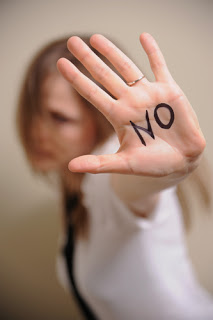
Don't be a martyr – say NO to other people and say YES to yourself
“You are not required to
set yourself on fire to keep others warm.”
I saw this quote on
Instagram the other day and I actually cheered. I’ve been wanting to write a
post about the power of saying NO for some time, and this quote sums up my
thoughts perfectly.
You know how safety announcements on planes tell you to attach your own oxygen mask before
helping others with their masks? That’s because you can’t help other people if
you have not been looking after yourself. In simpler, less alarming terms: you
can’t give energy if your own tank is empty.
A lot of people who
seek reiki treatment have emotional imbalances because they’ve created energy blocks
in their bodies through having a lack of boundaries in their lives.
So many of us –
especially women, because we’re often socially conditioned to be
people-pleasers – struggle to say the word NO to things that we don’t want to
do because we think people won’t like us. We don’t like letting people down –
so we say yes to every social event or request... and in doing so, we let
ourselves down, because we end up stressed and on the path to burnout. We
fear what other people will think of us if we say NO so we say yes, then we end
up resentful about having no time to ourselves, and feel like we’re being taken
advantage of. We also feel stupidly, irrationally guilty about saying NO.
Just to clear this
up: no is not a bad word. It is a
very powerful tool for protecting and enriching your
energy levels and emotional health. If you consistently say yes when you want
to say no, others will expect you to drop everything to help them whenever they need to move house, organise their parents’
anniversary party or remove an ingrown hair – because they’re responding to your past behaviour. You can’t
expect people to honour boundaries that you have failed to set.
 This doesn’t mean you
shouldn’t help out your mates and spend time with your relatives and in-laws – but not at the expense of your own health and wellbeing. If you feel like
someone might be taking the piss and you’re feeling resentful about it, they
probably are. Set very clear parameters, eg: “Yes I’ll come to your
sister-in-law’s baby shower with you but I’ll only stay an hour” or “I won’t be
able to give you a lift to yoga on Saturday morning because I really need a
sleep-in but I’ll meet you for a quick coffee next weekend” or “I’ll look after
your kids for two hours if you’ll pick mine up from school when I have a doctor’s
appointment”.
You do not have to be
a martyr in order to have close friendships or loving relationships. In fact, people will respect you more if you do set boundaries.
If they don’t... maybe you need to ask yourself how much of a presence you want
them to have in your life.
The most important
thing you need to know when it comes to boundaries is that saying yes to
everyone does not make you popular or loved – it makes
you a doormat. Set boundaries... before you set yourself on fire.
PS I’ve just posted
the quote at the top of this page on my Instagram – if it takes your fancy,
visit my feed at @onegroundedangel and regram it.