
I'm very sorry for your loss. How can I help?
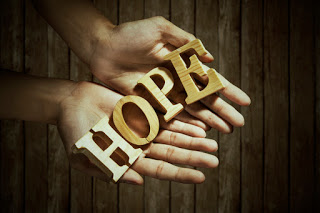
Sadly, a fortnight ago I found a message in
my ‘other’ inbox on Facebook (which I seldom check) from this lovely woman’s daughter,
letting me know her mother had passed away the day before my letter arrived. She
attached a photo of a wall (see below) covered with letters from around the world, and said
that it had brought her some comfort to know that so many people cared so much.
Once I got over my annoyance that it had taken me three days to post my letter (!) I realised that a beautiful thing had happened in this Ontario
town. In a time of immense pain, this lady was able to derive a small measure
of peace from small but powerful acts of kindness by complete strangers. It was
a heartwarming thing to bear witness to, as well as to have participated in, in
a very tiny way. Of course, no wall of letters can protect her from the unrelenting ferocity of grief but perhaps this visible reminder of the power of
hope can provide fleeting moments of shelter.
This got me thinking about the ways we can help people
as they grieve. I’m not talking about strangers here, I’m talking about the
people we care about. It’s heart-wrenching watching someone dear
to you in absolute agony over the loss of someone dear to them. What do you say? It’s hard not to fall into
well-meaning but ultimately useless clichés: “Let me know if there’s anything I
can do”; “Call me if you ever want to talk”; or the woefully inadequate: “time heals
all wounds…” It’s so difficult to know what you can do that will actually help.
There are Cheryl Strayed quotes for these situations,
as there are for every emotional quandary. A man wrote to Cheryl (aka ‘Dear
Sugar’) asking for advice on how to support his partner as she grieved the
death of her mother. Nothing he did seemed to help, he wrote, and it was
tearing him to pieces seeing her in so much pain. Cheryl’s response explained
that we have a tendency to want to rush in and offer advice or practical solutions when someone we care about is suffering. But what counts, she says,
is not *how* we show up for that person, it’s simply that we *do* show up for
them, again and again and again. We keep in contact. We let them cry. We listen. What comes from our heart is more important than what comes from our mouth. Anyway, that’s what I took from Cheryl’s response. Here’s what she actually wrote: “It feels lame because we like to
think we can solve things. It feels insufficient because there is nothing we
can actually do to change what’s horribly true. But compassion isn’t about
solutions. It’s about giving all the love that you’ve got.”
Yes, it is. Thanks, Cheryl.
 |
| The 'letter wall'. |
PS: On a lighter note, I got chocolate smeared all over my
keyboard in the process of writing this post. Totally worth it. Happy Easter, everyone.
Nobody wants to feel vulnerable. But everybody needs to. Here's why
Have you ever had one of those dreams where you’re at
school or work, and suddenly you look down and realise you’re completely naked?
That sensation of feeling exposed has been a constant for me since I
started this blog, and I’m starting to realise that that’s a good thing.

Renowned vulnerability and shame researcher Brene Brown talks about a ‘vulnerability hangover’ – that stomach-churning feeling of
dread that occurs when you’ve revealed more of your true self than you have
before, and now you feel emotionally exposed, ashamed and probably full of self-loathing.
You’ve shattered the façade of coolness and competency, revealed your authentic
self, and in doing so have put yourself up for judgment and potential ridicule.
Perhaps you texted someone asking if they’d like to go on a date, and they haven’t replied. Maybe you told your
workmates about your battle with post-natal depression and they hurriedly
changed the subject. Perhaps you started a blog where you outlined your
deepest fears, your slightly left-of-field spiritual beliefs and all the things that
make you different. (Um, hello!)

I think you can see where I’m going with this.
Depending on the type of content, I get a massive vulnerability hangover almost every
time I post on this blog, and it can last for
days. I've penned some very personal stories in this space, and in one instance, the exposure factor made me felt so yucky
that I could not bear to publish that post for two days. Eventually I did, because I knew that would help me destabilise my fears… but I can’t tell you how sick I felt about it.
There aren’t enough hash browns in all of McDonald’s to ease a vulnerability hangover.
Brene Brown has dedicated her academic career to
teaching us why allowing ourselves to be vulnerable is an act of strength, not
of weakness, and it can transform the human experience. She is incredible
– seriously, if you see only one TED talk in your lifetime, make it this one...
there’s a good reason it’s one of the most viewed talks on the channel. Brene
writes that being encased in a self-protective shell hampers the extent to which we can grow and fully experience life – the way we love, belong, trust, feel joy and express creativity, etc – in all
its uncertain glory.
Being vulnerable is not, by the way, the same as revealing details about yourself in a bid to get attention or sympathy. Celebrities
are not making themselves vulnerable when they post nude pictures or TMI details about their health; they are only revealing the extent of their low
self-esteem and need for validation.
Back to my own vulnerability hangover. I am happy to report that, so far, I have lost no friends as a result of making myself vulnerable on this blog, and I am not aware of anyone slagging me off (although I can’t rule it out).
Actually, some wonderful things have happened. I am more
(quietly) confident and more self-assured. I am less controlling of my own and other
people’s behaviours, less afraid of judgment, less afraid of isolation, and
less afraid of all the one thousand and one things that could go wrong at any
given moment. I don't think that is solely due to the blog; I've been doing a lot of work on improving my low self-esteem and I'm sure that has been a major contributor. But being vulnerable, I am realising, is an essential part of growth, and by doing so I have strengthened my relationship with myself. By forcing out of the shadows the sense of shame that I had held at my core, I am seeing myself in a more compassionate, more accepting light. I feel
like I am starting to become the person I was supposed to be all along but
had not felt safe enough to let myself be.
It has also transformed my relationships with others.
In the process of opening myself up and revealing unflattering details about
myself, I have forged deeper connections with people already in my life, and
established common ground with strangers. And in that process, many of these
people have revealed the rawness of their humanity to me, too. People’s pain.
People’s insecurities. People’s fragility. I am seeing old friends in a brave
new light. I have once again been reminded that though we are different, we
really are all the same.
None of this was the purpose of my blog, but it is a
better outcome than I could have expected.
There’s a sentence by lyrical US writer Andrew
Solomon that I scrawled in the front page of my diary at the start of this year
and I come back to it every time I need to be reminded of my inherent value. It’s the closest thing to a life motto I have. It reads: “If
you can give language to experiences previously starved for it, you can make
the world a better place.”
Through this blog I am making my world a better
place. I can't help you or anyone else make your own world better – that job belongs to you – but if me writing about my journey of personal growth prompts you to ask yourself new and pressing questions about what you stand for, where you are going and how you might be keeping yourself hidden, my ongoing vulnerability hangover might *just* have been
worth it.
It still feels yucky though.

Why we need more surprises in life

My brother and sister-in-law are having a baby later this
year (sidebar: I’m going to be an aunty – yay!) and they’ve opted not to find
out the gender. Initially I thought this was ridiculous – how can you prepare
adequately if you don’t know what you’re having?! – but my normally ultra-pragmatic
sister-in-law explained that they chose not to find out because “there are so
few surprises in life”. I get that now.
When you think about it, the element of surprise is in desperately
short supply these days.
Everything we need to know is at our fingertips. We can find out the rough time a storm front will roll into town and saturate our washing line, the score of every game of hockey being played at any given moment and the names of game shows currently being watched in Uruguay. We’re used to having data at our fingertips so it’s quite disconcerting and mildly panicky when you aren’t given the information you want at any given moment. In the digital age, instant gratification is our MO.
On Saturday I went to this rad cool crazy event called
Underground Cinema which is sort of like a murder mystery night. You buy a
ticket a few weeks in advance and get told the theme – in this case, the 1950s
and American politics – then you’re invited to a secret meeting where you get
your first clue. A day before, you get told the location, then you turn up on
the night with the instructed random items (in this case an A4
envelope and some earphones) then you have to follow a series of clues by
questioning actors (who played their parts brilliantly) and each other, and making
your way to the venue where the movie will be screened.
For a control freak like me, this lack of advance information
is stress-inducing. How will I get there if I don’t know where I’m going? How
late will I be out? What will I wear? I mean, is the venue going to be covered?
Will I have to walk on paving stones in heels? And crucially, will there be food? I
can’t go more than three hours without a decent meal – not even kidding.
Once I forced myself to take a chill pill, I realised it’s
this lack of information that makes the event so much fun, and so memorable. The
anticipation and the ‘what movie do you think we’ll be watching?’ chats with my
friends in the lead-up make the night enthralling, and I think if I’d known the
movie and the schedule of the night in advance it would still be enjoyable – but
nowhere near as much.
Sometimes when I’m doing angel card readings I get people
demanding specifics: when will I meet my soul mate? How many years will there be between my children?
Will my best friend get deployed to Afghanistan next month? (Seriously – that is
an actual question I have been asked.) This is problematic because the spiritual
realm doesn’t think about timing in the same way we schedule-crazed humans do. Everything
we need to know is revealed to us exactly when we need to know it, and not a minute
before. For people used to being given deadlines and Outlook meeting
appointments, this lack of clarity is outrageous. But the thing is, we’re not
supposed to have all the information at once.
I’m one of those people who reads the last page of a book in advance.
I also have a tendency to, while watching a movie, read the Wikipedia plot in
full. It’s not that I’m not enjoying the story or the plot, it’s just that I want
to know that everything is going to work out OK. But it always does work out OK
– or at least, it works out how it’s supposed to – regardless of me knowing
what will happen or not. It’s very difficult for me to let go of a desire to
know the outcome.
I’m starting to realise that we need more surprises in our
lives. There’s such beauty in not knowing where life is leading us, or how our
story is going to play out.
More surprises, please. But only good ones, obvs.
My New Year's resolution: no more sweat-shop clothing!
 My track record with New Year resolutions isn't great, so this year I
took a different approach and decided to work on something that was actually
important to me, as opposed to something I thought I really "should"
do (eg more exercise, sit up straighter, rescue orphaned baby birds). I figured if I
nominated a goal that was aligned with my values system, I'd have better odds
with the follow-through, because it was something I cared about.
My mission this year was to avoid buying any clothing I knew (or had
good reason to suspect) was made in a sweat shop.
I'd been feeling guilty about my habit of buying cheaply made garments
for some time and when that horrific Bangladeshi factory fire in 2013 put this
ethical issue in the international spotlight, my
conscience started to get louder and louder. This year I decided it was time to break up with
H&M et al.
Yes, I do know that my refusal to buy clothing from suspect chain stores
will not save workers' lives but it will mean I'm not contributing to a regime
that victimises and exploits people in developing nations. It also means I'm
supporting workers in my own country. I believe that we're all here to learn
how to treat each other with kindness, and the way we use our money is part of
that.
Turns out, this is one of the more labour-intensive goals I've taken on.
Every time I want to buy something, I have to research the label's
manufacturing systems. This is quite a process as a lot of companies seem
unwilling to divulge relevant information (which is very telling). The majority
of things I've wanted to buy, I've had to pass on because it's clear they are
not ethically made. On the positive side, I'm saving lots of money (silver
linings, people!).
It feels good to be putting my money into my local economy and I'm
enjoying trawling through market stalls and second-hand stores. I've learned
more about the Australian Textile, Clothing and Footwear industry's Ethical
Clothing standard, which verifies all workers are receiving their legal
entitlements - but so far only 15 labels have been granted accreditation. That
tells you everything you need to know.
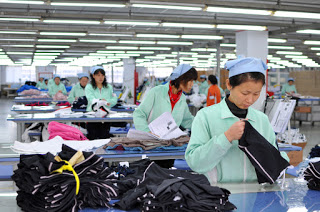
Aussie retailers that have not signed the accord - and which,
consequently, I will never step foot in again - include Best&Less and the
Just Group, which operates Just Jeans, Dotti, Portmans, Jacqui E, Jay Jays and
Peter Alexander. Sad face.
A lot of chain stores I used to frequent have signed this accord, but I
remain suspicious of them anyway. Sorry Kmart, but how is it possible that an $8 T-shirt has been made in good conditions? Sigh.
Confession: It's only mid-March and I've already broken my
resolution.
Here's where I came undone: sports shoes. Turns out it is almost
impossible to source running shoes that are ethically made. Because I have
pronated feet and knee problems, I need quality, specialised shoes to support
me in my fitness regimen, and it seems like every major sports shoe label has a
black mark against its name. Oxfam says that none of the sports brands pass the
grade in terms of workers' rights. Its sternest words are for Nike, Adidas and
Puma. I avoided that shady trifecta and went with a pair of Asics but I have
good reason to doubt they were made by fairly treated workers. But what could I
do? Rock and hard place.
Despite this violation, I'm confident I can get my New Year's resolution
back on track. This is something that's really important to me, and I hope this
post inspires you to think about your buying practices too.
I'll let you know how it works out for me.
Tissues and issues: a beginner's guide to confronting Fear

I thought long and hard about whether to publish this post. It’s more personal than I am comfortable sharing. The reason I did decide to upload it was because the point of this blog from the outset was to share my story of personal growth honestly. I believe that Fear is something we ALL struggle with, in different forms. We are different, but we are all the same.
What’s the name of that headache you get after intense
crying? Is there even a name for that? There should be.
On Saturday I looked at a photo of me with my family
dog and with no warning I burst into tears and could not stop. This photo is
very precious to me. It was taken last March, three weeks before I left New
Zealand and it shows me cuddling the dog for what I suspected might have been
the last time (luckily he is in very good health and I was able to see him
again at Christmas). He is generally affectionate but usually gravitates
towards my parents for cuddles, so for him to lavish so much love on me on this
occasion was wonderful, and I lapped it up. Cue #dogselfie.
This photo is attached to my wall so I see it every
day, but the reason it aroused such intense emotion last weekend was because I
looked at the joy in my eyes and I suddenly remembered what unconditional love
felt like. And that brought me face to face with my deepest, most powerful Fear* (thank you very fucking much, Autumn equinox): that I will never be deeply loved.
And just for good measure, it brought along its ugly twin: the Fear that I am
not worthy of love.
 Yes, I know both these thoughts are bullshit. That’s the thing about Fears – they have no basis in reality. But it’s only
when we are prepared to stand up to them (instead of running away) that we can
truly see that.
Why is this ugly stuff coming up now? From an
astrological perspective the Autumn equinox – which took place on Saturday, the
day of this teary incident – brings us face to face with the darkness of our
Fears, thereby spotlighting the areas we most need to work on in order to move
forward and evolve.
These core Fears are something I have probably always
had, without being aware of them, and have tried to bury, unsuccessfully, with
several methods over my lifetime that range from binge eating to keeping people
at arm’s length.
Now that I’m becoming more comfortable in my own skin
(old age will do that to ya), and am no longer scrambling around for an
emotional Band-Aid, these Fears are back with a vengeance. Which feels really
crappy and hurty but is actually a good thing, because that gives me the
opportunity to overcome them once and for all (I hope). Instead of dealing with
symptoms I am now dealing with the root cause. If you know what the problem is,
you can fix it, right?
In the rawness of my tears last weekend, I felt a
measure of relief that I was no longer running away from my Fears. There was a
sort of acceptance – an acknowledgement that, yes, I’m scared, but I recognise
what I’m dealing with now (namely: a tired old story with no factual basis) and
I’m not letting it run riot over my emotions. I’m going to remind myself of the
many tangible reasons I know these Fears to be untrue. I’m going to refer back
to my Self-Appreciation Project jar and reflect on why I’m absolutely a worthy
human being. And then I’m going to dust myself off and go back to participating
in all the joy, sadness and mediocrity of the human experience. The only way
out is through.
Has
anyone else found themselves challenged by “old stuff” and an underlying Fear
response this past weekend? Would love to hear your stories.
*Eagle-eyed readers will notice I always capitalise Fear. There’s a reason for that. my experience of Fear is that it is powerful it has often stood over me like a bully, so that’s why I personify it.