
Amazing grace. I want it
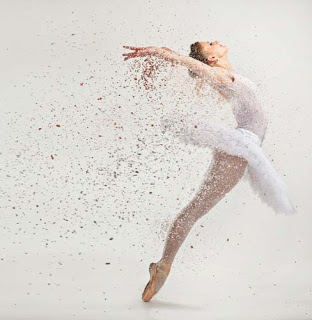
For most of my life I have longed to be graceful. I wished I could glide into a room emanating such allure that every man would stop what he was doing to admire me. To dress impeccably and with such class I could have just stepped off a billboard. To hold myself with such poise that there would be no need for me to even speak.
I possess none of
these attributes. My sense of style is less about style and more about whatever
items I can rustle up that don’t make me look like I’m in the middle of a
reality TV home renovation. My inability to match garments is renowned. Instead
of sitting neatly in place, my hair behaves like your wild teenage daughter –
i.e. it’s never where it’s supposed to be. And despite being blessed with long,
slender legs I am unable to wear heels that would gift me the feminine appeal I
long for. In heels, I have all the finesse of a newborn foal stepping on
butter. In my beloved ballet flats I have good control but the refinement
of a truck driver.
What I have realised,
though, is that no matter how unruly my appearance and disposition, I can live in a state of grace – although not in the way the
majority of people define the word.
Last Christmas I wrote
a post about grace as associated with redemption, and my definition of the word
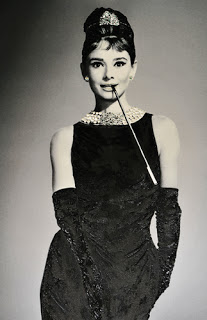
has broadened further since. Our society loves to hold up Audrey Hepburn in Breakfast
at Tiffany's as the epitome of grace and elegance. Yet that role – as
a character who displayed precious little regard for other people’s feelings –
is far removed from what made this celebrated actress truly graceful. It’s true
that she was mesmerisingly beautiful, but her grace had nothing to do with her
face or her wardrobe, and everything to do with her heart.
Audrey worked tirelessly
as a UNICEF ambassador, fulfilling the call she felt from within to bring hope
and
 worldwide attention to the plight of starving children in countries such as
Ethiopia – a humanitarian mission I admit I didn’t know about until I read about it on social media. Rather than focusing on looking fair, she implored the world to BE
fair… in the way it distributes its resources and opportunities.
This, to me, is grace.
No longer do I aspire to be chic or elegant (that’s probably for the best, all
considered), but there’s opportunity for me to build towards a state of grace
in my thoughts, attitudes and behaviour. Certainly I’ll never reach Audrey’s
levels but that doesn’t mean I can’t maximise opportunities to show and feel
grace in my everyday life. Grace is gently leaning forward when I want to retreat. Grace is showing kindness to myself and to others even when I don’t feel like it. Grace is finding peace in my heart amid a cacophony of criticism, fear
and drama. Grace is gently reminding myself on my bad days that tomorrow is
another day and it will be better.
That’s my understanding
of grace – and it truly is amazing.Stand up for what you think is right - but speak with love

I’ve spent most of my
life running from confrontation, so I can understand how yesterday’s angel card
– which urged us to stand up for what we believe – might have been a little
difficult for some of you to digest. The reason many of us struggle with assertiveness
is because we don’t want to cause friction or upset other people. We’d rather
suffer than put ourselves in a situation where we might spark a conflict. This
is doing ourselves an enormous disservice, and robbing the other person of a cue
to reflect on their actions. And that’s a shame because we are all here to help
each other lead better lives – but, ideally, without judgement and without
infringing on others’ right to choose their own direction.
It’s important to
know that you’re not being mean to someone if you say something that is contrary
to their opinion or behaviour. If they are doing something you consider unfair,
immoral or which causes pain and difficulty to another person (including
yourself), you’ll feel a pull to speak up from within. What’s important is
that your intentions are good – ie you speak from the heart – and that you
frame it in a way that isn’t a personal attack. If someone cuts in front of you
in a queue, for example, you’re not being a troublemaker if you point out that
they’ve cut in, and that you were there first. Regardless of the outcome, at
least you said something – sometimes
people will take the piss because they’re willing to wager that no one will
call them out on it. Being assertive is not the same as being aggressive. If
you call someone a nasty name and shout at them for their rudeness, that’s
probably not going to go well.
 |
| Speak your truth - with love |
I’m not saying there aren’t
sometimes consequences to speaking out – and of course you should take that
into consideration – but if your intuition is telling you to speak up, you’re
urged to honour that.
The history books are
bursting with examples of people who’ve spoken up despite the risk of adverse
effects – whistleblowers, civil rights campaigners, agents for change. But it’s
not only big social issues that call us to speak our truth, it’s everyday
interactions.
About eight years
ago, my best friend at the time, who was living overseas, made the very
difficult decision to break up with her boyfriend and move back home. Because
it was going to be so challenging living with him while she went through the
process of packing up, leaving work and severing ties with the city, she
decided not to tell him she was leaving until just before her departure date,
about three months down the track. I can certainly understand her desire to
delay that inevitable crushing moment, but I felt that in not telling him their
relationship was already over she was deceiving him. I felt – and this is only
my opinion, of course – that she was being unfair. In buying “peace” for
herself she was maximising the pain for him later on, when he realised he’d
been kept in the dark and misled as to their future together. I told her all of
that... and I think you can guess how well it went.
She went ballistic at
me and told me that as her friend, my job was to support her. I believed then – and
I still believe – my role as her friend is to challenge her on significant choices that
reflect poorly on her. Of
course I was far too upset to explain that at the time. Instead of reflecting again on
whether her decision was right – which she probably, deep down, knew would
bring her face to face with something she did not want to face – she chose
to focus on being outraged at me. A personal attack ensued, and we did not
speak for about three months, which made us both miserable and put a lot of
strain on our mutual friends. I should point out that this is only my side of
the story, and I’m sure she has her own perspective on the incident. I should
also point out that the way I expressed my thoughts was embarrassingly
sanctimonious and laden with judgement, so I can hardly blame her for firing up.
(Cringe.)
Do I regret my
decision to speak up? No, although I’m not proud of the way I expressed myself.
For me, it was important. One of my core values is treating other people
fairly. It’s not up to me to tell other people how to behave but in a situation
where I feel a deep unjustice is being done, I would like to think I will
always use my words (carefully) to bring another perspective to light so others
will pause and question their actions. What they do after that is up to them – and
if they’re a friend of mine, my job then is to accept that and look for ways to
support them.
If you feel deeply
uncomfortable about someone’s actions and they ask you for your opinion – or
worse, ask you to be party to it – what will you do? Doing the right thing is
an incredibly complicated – and often, risky – act but it’s one that your
angels ask you to honour as much as you can.
It’s certainly something
to think about.
I’ve got the power – and so do you. Time to stop playing the victim, and use it

If you’re ready
to make changes in your life – and since you’re reading this blog, I’m assuming
that you are – this is the time to do it. With a full moon tonight in Capricorn
– that’s the ultra-ambitious, success-driven sign of the zodiac (shoutout to all
the Cappys!) – the energy is right for using your power to create something
amazing.
Unfortunately, power
has a serious PR problem. We think that it corrupts, dominates and breeds exploitation. In other words, we regard it as a negative entity to be avoided. But in a spiritual sense, power is actually a positive force because
it’s what we draw on to make our dreams come true and propel ourselves forward – and for that reason, it’s intrinsically connected to love. It’s
only when it’s used out of fear – for example, by world leaders who are so
motivated by fear of being inadequate that they fixate on controlling
other people – that power gets a bad name.
At many points in my life I have rendered myself powerless. In my early 20s I blamed my flatmates for cooking badly, which
gave me an excuse to be overweight. I blamed the economy for my
poor cashflow, which gave me an excuse not to manage my funds better. I blamed my
industry for being too competitive, which gave me an excuse not to pitch for
work I wanted (thereby risking failure). I blamed my city for being too boring,
which gave me an excuse not to work harder at overcoming my shyness barrier and extending
my social circle (thereby risking rejection). Oh, poor me!
When you’ve cast yourself
as the victim, as I had, you are giving away your power. You are blaming other
people – your lazy partner, your inept boss, your unforgiving father, whoever it
is – for the state of your life. If your problems are someone else’s fault,
that (conveniently) means you don’t have to take responsibility for your
choices. You have licence to test the patience of your friends by whingeing and
complaining all the live long day. Poor you.
It took a very
long time for me to accept that nothing was going to change until I did. The
point of power was in my decision to adjust the way I had framed these situations
in my mind. Even if you can’t change your situation, you can always change the
way you think about it. Taking control of your thoughts, and not resenting
others for the landscape of your life, is the first step in taking back your
power. And that gives rise to action.

If your life isn’t
playing out how you’d like it to, ask yourself honestly if you have been blaming
someone else for that. Other people may well be involved, complicit and even influential, but ultimately you hold all the cards. You have the power to
change the situation and yield a better result – for everyone. To borrow a cliché,
the best time to do that is yesterday, and the second best time is today. With
2015 being a ‘number eight year’ (read more here) and the full moon beaming out
in Capricorn, this is a – ahem – powerful time to be alive. We have the power to
create a shiny new reality for ourselves and others around us. Things that may
not have seemed possible in previous years are no longer closed off. Who would have
thought the US would finally legalise same-sex marriage?! This proves that wonderful things
are possible when you act from a place of love. And despite its image problem,
power is all about love. When you truly know how much value you hold, you know
that you deserve to have your dreams come true, and you’ll feel inspired to utilise the power available
to you to make that happen.
The onus is on
you, right now, to take back your own power and use it to get what you want (what you want, what
you really really want). Be bold. Be creative. Be your own hero. The Universe
responds to thoughts, prayers and affirmations, but it bends most favourably in
your direction when you take action. Go do that.
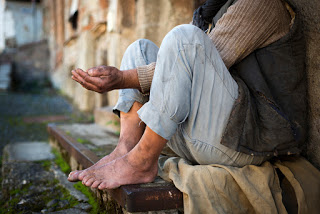
Confession: I struggle to know what to do when I see homeless people. Can you relate?
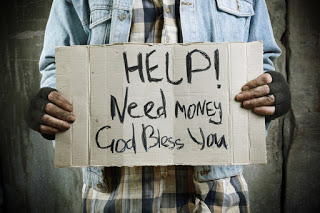
Two nights ago I was
coming home from a group meditation and I experienced something that almost made me come
undone. It was 10pm on a bitterly cold winter's night, teeming with rain, and
there was a homeless man on his knees proffering a paper cup to the thighs of
dallying drunks and harried corporates rushing by for shelter. I crossed the
road to give him $5 and, in a soft, gentle voice completely incongruous with
someone who is living a hard life, he thanked me and said he hoped I got home
safely. I have never felt more guilty for having a home to go to. I had to turn
away because my eyes were leaking for reasons that had nothing to do with the
rain.
There are so many
homeless people around Sydney – particularly noticeable at this time of year,
when it’s so cold – and sometimes walking to work in the city past so many people
hiding under tattered blankets is to run an emotional gauntlet. I do give money
to a few of them on a regular basis, but there are so many that I have to limit
it to only two people, and I have to admit I do find myself subsiding into a state of compassion fatigue.
Basically, I become
so used to seeing people in these wretched conditions that it has become normal
to me. Which means I do nothing to help, despite my life of extraordinary
privilege. Note to self: there is nothing normal about this level of human
suffering.
I know people who
refuse to give money to homeless people on the assumption that they will only
spend the money on ice (that’s the drug Americans know as meth, and New
Zealanders know as P). I have always thought that it’s not my place to judge
someone for what they do with their money, and frankly, if someone is on a
street corner dressed in rags and reeking of urine, they need my gold coins
far, far more than I do. There’s nothing I can do with that meagre amount of
money that will hold as much value to me as it will for someone living in the
depths of despair, whose entire existence depends on the kindness of strangers.
That said, I have no judgement towards people who opt not to give their money
to homeless people. Your money is your own, and you’re certainly not obliged to
give it to anyone.
 I think I
harden my heart against the homeless sometimes out of a fear that it will
upset me (for good reason). For that reason, my response typically goes one of two ways: I’ll hurry
by and distract myself so I don’t look (which makes me feel guilty). Or I’ll
give money but practically throw it at them, speeding off before I can hear
them speak to me. I know logically that I can only give so much (although I
could certainly do with giving more than I have been) and I can’t help
everyone, so my guilt is misguided – not to mention unhelpful. I also know
that, in truth, kindness isn’t really kindness if I’m giving begrudgingly or
defensively. It would probably be more valuable to actually have a conversation
with homeless people, ask them questions and listen to their opinions, to
remind them that they matter (we all need to be reminded of that, actually), and
perhaps bring them a sandwich, a banana and a newspaper. This is one solution I’m
considering.
It’s pretty clear by
my increasing discomfort levels that I need to change my approach to this morally
complex situation, and I don’t think money is the answer.
The ‘how’ is
probably less important than the ‘why’. And the ‘why’ is because compassion is
one of my fundamental beliefs. Mother Teresa knew a thing or two about kindness
so I’ll throw to her now: “I prefer you to make mistakes in kindness than work
miracles in unkindness.”
Quite.
Believing in the happy ending when you're halfway through the scary book
 When you Google the
word ‘trust’, the fourth thing that comes up (behind ‘trust deeds’, ‘trust
definition’and ‘trust tax return’) is ‘trust issues’. Oh Google, you know me so
well.
I’m one of those
people who flips to the last page of a book when the drama gets intense, and
Googles the plot summary of a movie if it gets too nail-bitey. You’d think that
would reassure me. But, no. Even when I know the story’s going to end
brilliantly, I still skim-read/skip through the uncomfortable parts. It’s as if
I can’t quite believe that everything really is going to work
out.
Despite years of
reading metaphysical texts, communicating with angels and now working with
energy, trusting the Universe to sort out my problems remains a major stumbling
block for me. On the surface, this makes no sense – I’ve already seen proof
that the Universe has my back, again and again and again. But even though I
believe a perfect outcome is possible, there’s a part of me that
doesn’t believe that it’s probable.
Whenever I find
myself on my knees in particularly difficult periods, the message I
get from the angels, again and again and again, is along these lines: ‘Trust
us. Let go. It’s going to be fine.’ I believe them, but I’m also doubtful.
Which is normal. It’s not possible, I don’t think, to have a learning
experience or challenge that isn’t accompanied by at least a small degree of
fear. The trick is learning to let go of the fear so it doesn’t hold you back
from living a big life. All I have to do is have faith and relinquish control
over the outcome… if only it were that easy!
Here’s the problem –
when I worry, fret and despair, I’m getting in my own way. My negative energy
increases, blocking solutions and contributing to an adverse result.
There’s a quote that
gets bashed about on social media all the time and it goes like this: ‘Everything
will be OK in the end. If it’s not OK, it’s not the end.’ This is posted endlessly
because it’s true – even though things may not work out exactly how you had
imagined, they’ve worked out the way they were supposed to. And often that’s better
than you had imagined, or there’s something better coming up. In either
outcome, you will be OK. You are always OK. (I’m saying this to you guys, but I’m
sure you realise I’m really saying it to myself.)
 I dealt out the ‘trust’
card in an angel card reading the other day and I was told that that message
was for me as well as the person I was reading for. That message was: trust it
is all going to be OK.
And it will. I’ve
already been told my business is going to thrive. I’ve already been told I’m
going to meet the perfect man for me. Therefore, there’s nothing to worry
about, right? Right? RIGHT?!
Everything is under control.
Not my control, but that’s probably for the best. (It’s fair to say the Universe
does a better job of running my life than I do.)
And then they all
lived happily ever after.