
Weekly angel card reading June 6-10, 2016
Eating healthy, nutrient-rich foods and looking after our physical health is a focus this week (soz!).
The angels also want us to let go of guilt we're still harbouring, and to look for guidance in all the right places... namely, our intuition.
Weekly angel card reading May 30-June 3
The way we treat people, and the way we allow others to treat us, is a big theme this week. In other words, truth and integrity... or just being a good human being, if you wanna break it right down :)
What do you believe in? My quest for faith without religion

One of my favourite advice columns in Cheryl
Strayed’s Dear Sugar series was her response to a letter from a woman
questioning the existence of God. Her six-month-old daughter had, against the
odds, survived surgery to remove a brain tumour, and a lot of people had been
praying for her (agnostic) family. The woman told Cheryl that the terrifying
event had left her wondering whether there was such thing as God, and if so,
had he saved her daughter’s life? But if God existed, she wondered, why had he
let her daughter get sick in the first place? Strayed’s reply was, as always, shoulder-droppingly
moving.
“What if you allowed your God to exist in the simple
words of compassion others offer to you? What if faith is the way it feels to
lay your hand on your daughter’s sacred body? What if the greatest beauty of
the day is the shaft of sunlight through your window? What if the worst thing
happened and you rose anyway?”
The reason I love this passage so much is because it
beautifully sums up what religion means to me – not the dedication to
please a supernatural bearded man who condemns and judges, but the innate
compulsion to honour the powerful spirit of love that exists around us and
within us. Something we can channel to give us strength, something that
inspires us to be more and give more, something reflected in the extraordinary
beauty of nature, something that serves as a life raft when we are adrift in
stormy seas. Something vastly more powerful than we could possibly imagine.
It’s sometimes difficult for people to understand how
I can believe in angels and in God yet not conform to any church-based faith.
It’s sometimes difficult for me to explain this.
I realise everyone has their own views on religion,
and I don’t wish to force my views on anyone. I totally understand that there
are all sorts of reasons institutional religion appeals to people – a sense of
certainty, for example. I respect everyone’s right to determine their own
values and faith; this is simply the expression of what feels true for me. To
borrow another Cheryl quote: “My truth is not a condemnation of yours.
Last week I went to a number of sessions at the always-brilliant Sydney Writer’s Festival; one of the standouts for me was social
researcher Hugh Mackay’s talk entitled Finding Meaning Without Religion.
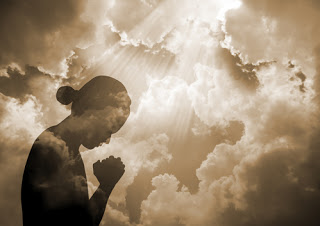
Around two-thirds of
Australians say we believe in God or some ‘higher power’, but fewer than one in
10 of us attend church weekly. To me, that indicates that people are
searching for spirituality in their lives without pledging allegiance to a
church’s definition. We’re individually searching our
hearts for what’s meaningful to each of us. I suspect for many people that
search leads not to stories in ancient lands and gardens, but – as Strayed so
eloquently put it – the “way it feels to lay your hand on your daughter’s
sacred body”. Or as the Dalai Lama says simply: “My religion is
kindness.”
What being religious, or spiritual-but-not-religious,
gives us is a sort of roadmap – albeit sketchy – to navigate this
confusing and sometimes bitterly unfair world. It gives us hope and it gives us
meaning. Essentially, religion is people putting their faith in
something larger than themselves.
If you find that larger thing in scriptures, hymns,
rituals and visits to religious buildings, that’s wonderful. If you don’t, Hugh
suggests you look for your own sense of meaning “in the eyes of the people who
love you, or who are at least prepared to put up with you” (lol). There’s a
Maori proverb from my native New Zealand which says: He aha te mea
nui o te ao. He tangata, he tangata, he tangata. That means: What is the most
important thing in the world? It is people, it is people, it is people.
I’m paraphrasing here, but what Hugh is suggesting is
we place our faith in the ties that bind us and the love we have for each
other. That is something both tangible and intangible. We often think of
religion in terms of salvation and redemption, yet when you look back to the
darkest periods of your life, who saved you and who helped you find redemption?
I’d wager it was the people who love you.
I’m not at all saying institutional religion is invalid, I’m simply saying that in my personal experience, matters of faith are best reduced to a framework of love and compassion. I find that in the
divine, but I also find it expressed through the people around me.
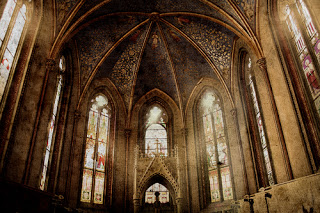
Hugh explains: “It’s in our DNA to be cooperative
and to form community. The way we form community is to behave in kind, tolerant
and respectful ways towards each other.” Instead of what religion you
belong to, he wants to know: “What kind of world are you dreaming of? And
how does this affect the way you go about your life and treat other people?” Perhaps
this is what Ram Dass was getting at when he suggested we “treat everyone we
meet as God in drag”.
Those questions, Hugh says, are far more important
that what box you tick in the religion question on your census.
The great pretender: imposter syndrome, and the fear of being found out

I used to have a friend who held a prestigious, high-powered
job in magazines. She was great at it, too – but she didn’t think so. She once
confided to me that she lived in terror that someday someone would tap her on
the shoulder and ask her to leave, telling her they’d figured out she wasn’t up
to the job after all.
This is what imposter syndrome looks like. At heart,
it’s the belief that you’re not good enough, and it typically involves a deep fear
that your inadequacy will be uncovered, probably in dramatic fashion. It’s
typically experienced by more women than men, because we are, according to
experts, more likely to recognise our faults (I’ll just park that statement
without further comment).
Imposter syndrome has got naught to do with your actual
performance or skills, it’s solely about an internal conflict, a deep suspicion
that you’ve somehow hoodwinked everyone into letting you have this job or
partnership, and they’re going to find out the truth about you very soon and
your entire life will implode.
Whenever we’re dealing with a fear – particularly one like
this, which has no logical foundation – the first most helpful thing we can do
is remind ourselves we’re not alone. Fear is a projection of the ego, not the
soul, and the ego is all about separating us from others. And you’re not alone,
truly. More than 70 per cent of people have experienced feelings of
fraudulence. That’s *feelings* of fraudulence, not actual fraudulence.
 Imposter syndrome thrives on blissful ignorance of the
facts. It ignores that your employer put you in this position because they
think you’re good enough. It ignores that you’ve already turned in work of a
high, or at least passable, standard. Reality check: even if you don’t feel
like you know what you’re doing (which is probably not true), you know enough
to be in the position you’re in, and there’s no reason you can’t learn more
from that platform. You are already good, but it’s your willingness to keep
going in the face of fear and all its stupid stories that makes you great.
The truth is, no one knows what the hell they’re
doing, most of the time. Fake it ‘till you make it is an entirely reasonable
work philosophy. In this life, we’re all making it up as we go along – anyone
who is a parent can vouch for this. Expecting ourselves to be ace at everything
is just another way we covertly bully ourselves. So, so unhelpful.
If a fear that your staff don’t rate you as a manager
is a source of anxiety for you, try to remember that what other people think of
you is none of your business. I know, I know… you *want* them to feel confident
in your abilities so they do their best work, but ultimately that’s up to them,
not you. The only thing within your control is, not the way others feel about
you, but the way you feel about yourself. And if imposter syndrome is an issue for
you, perhaps you need to do some work on bolstering that (don’t we all!).
Although I haven’t experienced imposter syndrome
myself, I’m very familiar with the feeling of inadequacy. My feelings of
unworthiness in any given situation generally stem from my tendency to compare
myself to others, and as a result, finding myself lacking. Like this: ‘She’s so
outgoing and funny and popular, and I’m so dull and awkward.’ In all honesty I
don’t know whether there will ever be a point at which I will ever totally
recognise my own worth – I doubt we as humans can ever fully understand our own
power in this lifetime – so instead of focusing on what it is I perceive that
I’m lacking, I try to look at what I do have. Not in a ‘well she may be pretty
but I’m this and that…’ type of way, more just a general counting of my
blessings without using anyone else as a reference point. This strategy has been working really well for me. In spiritual truth, none of
us really lacks anything – we are all complete. Different, but wholly
everything that we need to be.

What I’ve found helpful when it comes to getting on
top of my comparison tendency has been turning it on its head by comparing
myself with… myself. Looking back at the person I was six months, a year or two
years ago, and taking a moment to appreciate how my emotional responses and
behaviours have changed and matured gives me a sense of value. I don’t need to
be the best, I just need to be better than I was. And I am, every day. And I
know that you are too. (Better than yourself, I mean. Not better than me, obvs.
Although you could be. Hey, let’s not compete, OK?)