
Weekly angel card reading August 1-5, 2016
Two very strong themes this week: the healing of emotional wounds (came up in three cards!) and trusting your intuition. Remember when it comes to healing, we need to be willing to let go of resentments and our ideas about how things 'should' have happened. If you're willing to do that, the energy supports a real release of old pain. Looks like a significant week! xx
Why are we so angry?
 I’ve been surrounded by a lot of angry humans recently.
People tearing down other people, people having full-on rants (online and IRL),
not to mention celebrities trading insults publicly. And briefly a few weeks ago, I
was one of them (an angry person, I mean, not a celebrity).
For two days recently, general
annoyances compounded to make my blood boil. These included (but are not limited to): people not
recycling; people stopping walking in the street right in front of me; people playing loud music on the bus; people trolling Victoria Beckham for kissing her
daughter on the lips (I can’t even).
By nature, I’m not an angry
person. I’m fairly good at processing my emotions then letting them go. So when
I find myself becoming furious about the way other people are behaving – which, unless it’s directed at me, is actually none of my business – it’s a sign there’s something going on within
myself that I need to address. Because anger, I think, is a bit like Instagram followers –
the more of it you have, the more you’ll attract.

Recently I found myself nodding along as
I read an article in Stylist magazine
which said that, as a society, our displays of frustration are becoming more frequent.
It quoted a UK study which found that 71 per cent of internet users have
exploded over computer problems; 50 per cent of shoppers have blown up over
parking and 45 per cent of us regularly lose our temper at work.
The story gave some reasons we’re – to
use a classy Aussie expression – getting the shits, regularly. With long
commutes, the relentless lure of the internet and greater work demands, we’ve
got very little time to ourselves. So when something threatens that precious time – a traffic jam, a printer error, for example – we become
panicked and we lose it. According to a study, 40 per cent of us will abandon a web page that takes more than three
seconds to load. Three seconds!
As well as being fuelled by everyday
annoyances, my anger was also directed at people who were doing things
I didn’t approve of…. because, you know, I totally have the right to sign off
on other people’s life choices (lol). When I became incensed at seeing a total
stranger posting pictures of a 10-day juice cleanse, I realised my anger was
completely irrational. Personally, I would never do a juice cleanse because I
believe our livers are perfectly capable of getting rid of toxins, so depriving ourselves of the food our bodies needs to thrive just doesn’t make
sense… to ME. But what other people do with their bodies is actually none of my
business. So why, then, would I get angry about this woman’s choices? Oh, that
would be the work of my inner control freak.
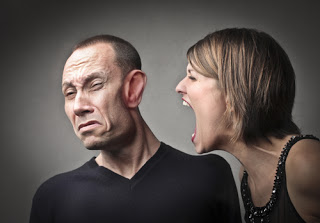
In my 20s (*gulp*), I had a tendency to
try to force onto other people my political views, my exercise regimen, even my
particular spiritual philosophies of the day... and responding with barely
concealed contempt when they didn’t oblige. This did not, as you can imagine,
make me good company at dinner parties. I remember one friend confessing she
was sometimes scared to express an opinion she knew I didn’t share, for fear of
setting me off on one of my shouty diatribes. *cringe*
Here’s the thing about anger: it’s a
mask for deeper feelings. That’s why psychologists call it a secondary emotion.
Beneath it is usually fear – of being inadequate, being rejected or being
deprived of something (love or respect, for example). But instead of comforting
and reassuring the scared child within, the angry old man in us takes over.
Because shouting and launching verbal attacks seems to offer immediate relief,
or at least release. But any relief is short-lived. The painful emotion lingers.
We live in a world in which we have no
ability to predict or control what might be thrown at us (although we
always have agency over the way we respond). We are all scared. While talking about
Islamophobia recently, The Project presenter Waleed Aly made some incredibly
insightful comments about human behaviour: “When we are presented with what we perceive as an outrageous opinion,
we can consider what motivated that person, try to understand their fear, and
empathise with how they came to their conclusion. The truth is, what motivates
them is fear. And fear is one thing we all share.” He wasn’t talking about anger, necessarily, but the sentiment is the same.
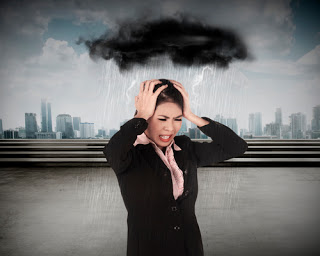
My anger was motivated by fear. I
wanted others to be on board with my viewpoints to make me feel assured that I was
‘right’ – others having a differing perspective to mine felt like a threat. I
had realised I was different and did not fit in with the crowd. I suppose I was
frantically looking for assurance and a sense of belonging.
When I started to engage in a process
of personal development (yep, still going with that one!), I started to feel
more confident about my place in the world and less inclined to seek validation
from other people. I’m at peace with the ‘not knowingness’ that is a part and parcel of being an adult. I have realised that I do not need
other people on my side – and that, in fact, there are no sides. I’m more at
peace with the idea that I can cope with the beautiful confusion that we call life, instead of becoming increasingly
panicked that I am not good enough, am in danger of being overwhelmed or
missing out on something. In other words, in learning to respect myself for my
differences, I learned to respect other people for theirs.
These are the lessons I need to return
to whenever I find myself getting angry at people for simply being people who are not me.
This does not excuse shitty behaviour by people directed to me, obviously. But
when it comes to everyday annoyances or people making decisions that have
nothing to do with me, it’s about returning my focus to the things that *are*
within my control: namely, my own choices.
If anyone needs me, I’ll be over here
cleaning up my own backyard.
Weekly angel card reading July 25-29, 2016
Great messages this week about using our power to propel ourselves forward in our lives (instead of to dominate others), working through relationship challenges and being open to receiving love and blessings. Boom!
Weekly angel card reading July 18-22
In this week's angel cards, we're encouraged to focus on our love lives and to set new work goals.Could be a big week!
On being highly sensitive: why I no longer watch the news

I’m going to confess something that no respectable journalist should
ever own up to. Here goes... I don’t watch the news.
Nope, never.
I don’t watch news broadcasts on TV, I don’t read the newspapers and I don’t visit
news sites (which, to be fair, are dominated by celebrity updates anyway).
It’s because, as a sensitive person, the news makes me feel deeply
despondent about the world and about the future. And given the horrors we’ve
already witnessed this year – Orlando, Istanbul airport and Brussels, to name a
few – my head-in-the-sand stance is more and more important.
As a qualified journalist, avoiding current affairs is somewhat
reckless. It’s been drummed into me from my training how important a role the
news media play in society – keeping politicians honest, setting the political
agenda and keeping the public informed. In short, the media are powerful agents
of change. With that in mind, I should absolutely be keeping up with the play
about what’s happening in the world (and especially since newspaper
circulations are falling – I should be supporting my fellow journos). Except...
I can’t.
Because watching, for example, reports of shootings, terror attacks,
racist diatribes from Trump and any accounts of crime deeply upset me. I’m not talking about just feeling sad or sorry for someone who is suffering, I’m talking about a core emotional response.

That’s kinda the deal when you’re sensitive. You pick up on the energies
of others around you, and it’s difficult not to take that on. It’s the same
with the media. I feel a smidgen of the victims’ distress and I crumble. I feel distraught and fearful. I feel distrustful of my fellow
man/woman. I have a crushing sense of hopelessness. Which is no good to anyone.
So I simply don’t watch it.
I know this means I am uninformed, and I’m fine with it. But I really
don’t think there’s any value in me knowing the details of the Orlando gunman’s
MO or the Paris terror attack locations, for example.
I’m sure media commentators would condemn me for sticking my head in the
sand, and I’m fine with that too.
Because for me, the toll of reading, watching or discussing these events
is too great.
Sure, it’s important to know that these tragedies have happened, and I
get that knowledge from social media and interactions with my peeps. But I don’t
delve into those stories, and I’m not afraid to walk away from conversations
that linger on them.
Here’s the thing – I do not need
to bear witness to people’s suffering to know that these actions are
deplorable. I do not honour the victims in any way by raking over the
nuances of their pain. I do not value my own life, or my family’s lives, any
more fiercely simply by knowing the extent that others have been subjected to
unimaginable pain. So I don’t imagine it, at all.
Here’s how I honour people who’ve lost their lives or suffered emotional
or physical pain as a result of a big-news tragedy. It’s the same way I make
sure that the world is not – in spite of how news coverage tends to make me feel
– hopeless or bleak, and the human race is not intrinsically evil.
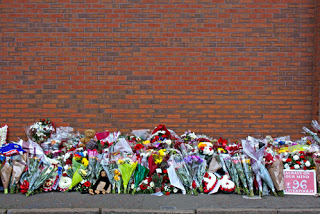
I keep giving love. I keep volunteering my time. I keep sending out
messages of positivity and hope on social media. I keep smiling at and
acknowledging the people who are overlooked (lonely elderly people on
park benches, miserable bus drivers, exhausted cashiers, etc). I keep showing
up for my loved ones who need me. (I am not saying I nail this stuff every
time, BTW.) Most importantly, I keep focusing on the beauty, the joy and the
magic in every day.
Liz Gilbert says that when confronted with horrifying news stories,
instead of upsetting herself by reflecting on the nefarious forces that led to
such a tragedy, she looks for the helpers. The people who respond from the most
basic level of humanity – that compulsion to love and support each other, which
we are all hardwired to do – by assisting those who are affected by a
devastating event. The people who queued all day in the Florida heat to donate
blood after Orlando. The people who offered to ride public transport with
Muslims after the Lindt Cafe siege in Sydney. The people who took around
glasses of orange juice after the Boston Marathon bombing. My heart swells just
thinking about them.
I am not suggesting everyone should avoid the news, and I’m certainly not
advocating ignoring horrific events completely. It’s true that these tragedies
are an opportunity for us to make change in the world – lobbying for gun
reform, for example, or rethinking our social attitudes to alcohol. So, yes,
there is value in learning more about these tragedies and in starting
conversations that may inspire change at a community and even a global
level.

But often, in my experience, what actually happens is we stand around
muttering comments like ‘it’s so sad’ and ‘it breaks my heart’ then we go back
to talking about Pokemon Go. That’s not a criticism, by the way – if
gathering to discuss tragedies, even for a short time, makes you feel better
and gives you an emotional outlet, that’s great. For me, it doesn’t – it simply
leaves me with a sense of futility and powerlessness. So instead I’ll allow
community leaders, reporters and those who feel called to agitate for change to
delve into negative news and use that as their fuel for action. I’ll support
them where I can, but only from a distance.
There is nothing I can do to stop these sorts of tragedies from
occurring. What I can do, however, is make sure they do not define the human
experience for me and for those around me. I don’t need to listen to the news
to do that – I just need to listen to my heart.