
Weekly angel cards October 10-14, 2016
Attracting money, receiving heavenly support and caring for children are all on the cards this week.
Check out my weekly card reading video to learn more.
Seems like everyone is an introvert now. But maybe that's not so healthy...

Suddenly it’s cool to be an introvert. Susan Cain’s 2013 TED talk about
the power of introversion has racked up more than 14 million views, her book on
the same theme is a New York Times
bestseller, and now memes and even T-shirts about detesting other people are
popping up everywhere. Who knew that declaring an aversion to human company
could be such a popular statement?
I’ve talked a lot on this blog about being an introvert, and why I
jealously guard my private time. I’ve explained how small talk leaves me
tongue-tied and how parties feel confronting for me (that post here). I’ve theorised that
my introversion is linked to my deep sensitivity – which, of course, is part
and parcel of being a healer and intuitive. But a few weeks ago I read a New York Times article asserting that some people are now using introversion – which seems to have
become a badge of honour – as an excuse to be anti-social. That’s
not a social condition, it’s laziness.
 I’ve realised I tend to do this too.
I have a theory that, for some, claiming to be an introvert – is simply the desire for a bit of time
out. We’re being slammed with a barrage of information 24/7 , and have less
time to ourselves than ever before, so saying we don’t like socialising might be one way of trying to validate our intrinsic need for more
quiet time. That has nothing to do with shyness and everything to do with feeling like we have to
justify relaxation time (as if it were an indulgence). So it’s not a case of: ‘I don’t
want to go to that engagement party because being around other people is draining
and provoking for me’, it’s more: ‘I don’t want to go because I’ve had no time
to myself this week and Saturday night is my only chance to get it’. And there’s
nothing wrong with that. But for me, I’ve realised I need to be
careful to make sure that preferring my own company doesn’t become the norm.
Because in limiting my interactions with people, I limit my ability to grow,
learn and give.
Actively avoiding gatherings where there will be a large crowd, or where
I will be expected to network, has become a habit for me. I know such events
will make me uncomfortable, so I try to dodge them. Of course it’s smart to
protect my physical energy and to be discerning about how I spent what little
downtime I have. But here’s the problem, summarised so brilliantly in the NY
Times article: if we are constantly retreating into our shells, we
aren’t connecting with each other. That’s a problem because, as Hugh Mackay
asserts in his book Beyond Belief – How We Find Meaning, With Or
Without Religion, human beings are hardwired for connection. We crave human
contact and a sense of belonging, which help bring meaning to our existence. It’s
also a problem because, from a spiritual perspective, we are here to help each
other (which also brings meaning to our existence, BTW). In refusing to sit in
company with other people, we are swatting away the gentle beckoning finger of
the Universe inviting us to offer support to another. We also cut ourselves off
from support from others (because even when everything in your life is going
swimmingly, you still need to feel supported). Being a hermit holds a certain appeal, but the alone zone is a space to rest, not to reside.

When the New York Times journo
asked Susan Cain (of the aforementioned TED talk and book) if, by choosing to
read a book in the car while their kids are at a school function, self-indulgent
introverts were actually just being rude – she laughingly agreed, saying sometimes “you have to
consider the other person’s point of view instead of getting wrapped up in your
own discomfort”.
Standing around in a bar talking about the weather (or in New Zealand,
where I grew up, rugby – which, bafflingly, seems to hold endless fascination for almost everyone)
isn’t exactly beneficial to anyone in a larger sense. But those awkward small
conversations can be the gateway to slightly larger interactions where people
do have an opportunity to express themselves. You may not necessarily be able
to offer practical assistance to someone complaining about the sleep
deprivation their seven-month-old son is inadvertently causing, but in listening to their
struggle you are offering emotional support. I believe that the greatest desire
of every person is to be seen, heard and understood. We facilitate this by
bearing witness to each other’s experiences and struggles, without judgement or unsought advice.
This is the simplest way we can show up for each other. As the saying goes, the
greatest problem with our communications is that we listen to reply instead of
listening to understand.
 Even the act of simply smiling at someone is immensely powerful on an
energetic level. Mother Teresa said: “Every time you smile at someone it is an
action of love, a gift to that person, a beautiful thing.” All the love-heart
eye-emojis in the world sent from your living room won’t make someone feel as
good as a RL smile does. (OK, I’ve just re-read that it sounds reeeeally
cheesy... but you know what I mean, right?) The point is, we shine our
brightest when we are around other people. Not when we are on the couch alone, sucking
up our tea through a Tim-Tam straw (soz!). I want to continue to allow myself me time but I’m going to be tougher on myself when my urge to evade
social occasions comes up.
Weekly angel card reading October 3-7, 2016
Lots of wonderful, practical messages have come through to help us navigate the week ahead. Channelling that inner confidence, being at peace and having fun are all part of our guidance for this week. Have a wonderful week! x
Who’s to blame? Finding fault finds fault in us all
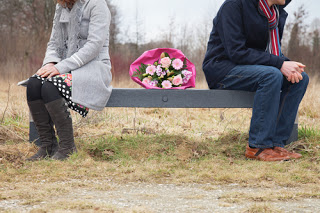 As we reeled
from the news of the Brad and Angelina split last week, I noticed an interesting pattern about
the way people processed this (arguably) major world event. A lot of people, I observed,
had a similar way of assessing this relationship breakdown – an instant urge to
look for someone to blame. I’m using the term ‘bad news’ loosely here since,
really, a celebrity split isn’t something that has an impact on us. But I’ve
realised this happens in situations close to home, too. When we hear about something
happening to others and we’re scared (whether we admit it or not) that this
could also happen to us, I’ve noticed that we have a tendency to label someone
as the good guy and someone else as the bad guy.
The reason I’m
talking about Brad and Angelina on this blog, which is generally a
celebrity-free zone, is because I’m
interested in the barriers we sometimes erect against compassion and empathy. Overlooking the fact that we’re patently entering the judgment zone when we comment on celebrities (which is not exactly healthy), I think the way we respond to events in Hollywood says
something about the way we respond to events in the real world.
 The concept of
blame first loomed large in my mind when a feminist blogger I follow on social media predicted that
Angelina would likely be cast as the villain by society, since unfortunately – and unfairly – it’s still seen as a woman’s job to hold a marriage and a
family together. To be honest I haven’t read enough about the split to know
whether this has played out, but the idea of choosing a villain is a
reasonable expectation. Remember when Brad and Jen split up? She was regarded as
a cold-hearted, career-hungry woman who had refused to give him the kids he
reportedly longed for – even though she had repeatedly said in interviews that she
*did* want kids. Yet Brad, who had clearly fallen in love with another woman –
which tends to spell disaster for a marriage, obvs – did not seem to be
lumbered with much, if any, responsibility for that relationship’s fracture.
Looking back on
when some of my friends separated from their partners, I’ve realised that although
I didn’t get involved, in my mind I definitely took sides (not, however, with any
gender bias). I apportioned blame to one party and sympathised with the other –
even though I’m well aware that relationship breakdowns are always a two-way
street. In some cases this was a show of support for the person I felt closest
to, but in other times it was because I was making a judgment about who had let
the other person down. Because I’m *such* a relationship expert, and other people’s relationships are totally my business (#sarcasm).
 I’m no
psychologist, but I feel like this is probably human nature. When we hear of
something upsetting, we look for ways to understand it. If we can frame it in a
familiar narrative – that of good vs evil – it’s easier for us to draw conclusions
about what happened, and ultimately feel better about it. If we can blame someone, we can reassure ourselves that it won’t happen
to us. Like this: My husband doesn’t have
any female friends so that won’t happen to us. Or: I never tell anyone my PIN so that won’t happen to me. And, chillingly:
I don’t walk alone at night so that won’t
happen to me.
My problem with
this kind of ‘good guy/bad guy’ narrative is not so much that it smacks of
self-righteousness, which is problematic in itself, but that it doesn’t allow space for compassion. If
we’ve decided Angelina ‘deserved’ a divorce, then we’ve overlooked her pain. Because whether you are the one who instigates a split or not, the end of a
romance is a bloody, bitter affair with waves of pain that knock you over long
after the event. In labelling people like they are simply characters in a story,
we erase their humanity.
Oh, I know what
you’re thinking – Brad and Angelina are celebrities, it’s not like they’re people
we know. But I have this nagging suspicion that the way we regard celebrities contains some truth about the way we
regard the people around us.
 I believe that in
any situation of conflict or disharmony, no one person is wholly to blame. Consider
this example. I have a friend who has been complaining for years about her
unhappy marriage. While I totally understand her need to vent, her tirade of
resentment is grating to listen to, and not only because it’s never-ending (and the fact that she has no family nor many close friends in Australia to talk to means I’m hearing it often). Her complaints focus only on the shortcomings of her partner, and wilfully overlooks
her own culpability in marrying someone whose behaviour had been disappointing
her long before they exchanged vows. By blaming him for her unhappiness, she
doesn’t have to take ownership of her responsibility for not only expecting him to be
someone other than who he was, but for continuing to accept a toxic home life
(i.e. not leaving him). Sometimes playing
the blame game is a way we hide. I’m not saying for a minute that she
deserves to be unhappy – no one does – and of course no one really has any idea
what actually goes on inside a relationship (which is another reason that passing
judgment is unwise). My point is that finding fault in other people can keep
us stuck.
I remember when I
was made redundant (the first time round, for those of you familiar with my,
ahem, “colourful” work history), an acquaintance remarked tersely that I really
should have seen it coming, since the company had been in financial
difficulties for a while. She was right… the writing was on the wall, and I
should have tried harder to look for alternative work. But does that mean I deserved
to lose my job and my final pay? Had I lost my right to feel
aggrieved about the unfairness of this situation? Was I the bad guy? As is
often true, this woman’s blame manoeuvre was more about her than it was about me.
(That won’t happen to me because I’d notice
if my company was going down the tubes and would quit.) Oh, the comfort
of superiority!*

From a spiritual
perspective, we’re here to be kind to each other. In an ideal world, this would
mean we’re able to feel compassion for, and offer support to, anyone going
through struggle such as divorce or job loss, regardless of who might have been
at fault. But the reality is that every
time we see someone suffering, we filter it through our own fears (we are
all programmed, after all, to protect ourselves from pain). And where fear goes, judgment usually
follows. I don’t really have any solutions for how to avoid falling into
this trap, but I have resolved to look out for the blame game when I notice
that pattern emerging in my little brain. This doesn’t mean I’d rush to comfort
a man who cheated on a friend, to give an extreme example, but hopefully I’ll
be less inclined to see situations as black and white. When we hold space for
people to be flawed, but ultimately deserving of love, we foster tolerance for
our own shortcomings and endorse our own worthiness, too.
Ideally, I’d like
to do better at listening and supporting without judgment. Something to aim
for, anyway.
*In the interests
of fairness, I should declare that I’ve totally done shit like this to other
people myself in the past. Ugh.
Weekly angel card reading September 26-30, 2016
As the heavy energy of September starts to subside, we're being invited to step forward into a new chapter... but first, there's a bit of groundwork to do. Getting clear on what is true for us, getting organised and releasing what no longer serves us all feature in this week's messages. Ready, set, go!